
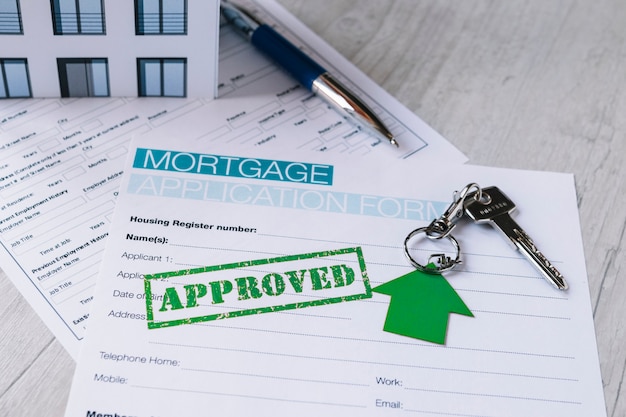
For many Kenyans, buying a home entirely with cash may not be realistic. A mortgage can provide another route to home ownership by allowing a buyer to borrow money from a lender and repay it over an agreed period.
However, a mortgage is a long-term financial commitment. Before applying, it is important to understand how the process works, how interest affects repayments, what the lender looks at and what additional costs may arise.
“A mortgage makes home ownership possible for many buyers, but understanding the loan is just as important as finding the home.”
What Is a Mortgage?
A mortgage is a loan used to finance the purchase, construction or other qualifying purpose relating to property. The property generally serves as security for the loan. The borrower makes agreed repayments over the loan term. Once the loan obligations are satisfied, the lender’s registered security can be discharged.
The State Department for Lands describes a charge as the registration of a lender’s legal interest in property used as security for a loan.
How Much Can You Borrow?
The amount you can borrow depends on factors such as:
- Your income
- Existing financial commitments
- Credit history
- Property value
- Lender requirements
- Loan term
- Applicable loan-to-value limits
The lender will assess whether your income can support the proposed repayment. You should therefore determine your realistic budget before beginning your property search.
Do You Need a Deposit?
In many cases, buyers are expected to contribute part of the purchase price while the lender finances the balance. The exact contribution depends on the lender, property and mortgage product. CBK’s 2025 Residential Mortgage Survey reported that the maximum loan-to-value ratio was below 90% for the majority of banks, although individual mortgage products can differ. This means buyers should not assume that a lender will finance the entire purchase price.
The Mortgage Application Process
The process generally begins by determining how much you can afford. You then approach a lender and submit the required financial documentation. The lender assesses your application and, if it is acceptable, issues financing terms. The property is then subjected to the lender’s required due diligence and valuation process. Once the legal and financial conditions are satisfied, the lender proceeds with the mortgage documentation and disbursement process. The exact sequence varies between lenders.
Property Valuation
The lender may require an independent valuation of the property. The purpose is to establish the property’s value and assist the lender in determining the amount it is prepared to finance. This is particularly important because the lender is using the property as security for the loan. A buyer should therefore understand whether valuation costs are payable by the borrower.
Understanding Mortgage Interest
Interest is one of the largest costs associated with a mortgage. A mortgage with a long repayment period may have a lower monthly repayment but result in substantially more interest being paid over the life of the loan. Conversely, a shorter loan term may increase monthly repayments while reducing the overall period during which interest is charged.
This is why buyers should compare both the monthly payment and the total cost of the loan.
Fixed and Variable Rates
Mortgage rates can be structured differently. A fixed-rate facility provides greater certainty for the period covered by the fixed rate. A variable-rate facility can change according to the pricing mechanism contained in the mortgage agreement. CBK reported that approximately 75.6% of mortgage loans were on variable interest rates in 2025, while the average mortgage interest rate was 13.5%. These are market-level statistics rather than a quote for any particular borrower. The actual rate available to you will depend on the lender, product and your circumstances.
How Long Does a Mortgage Last?
Mortgage terms vary. CBK reported an average mortgage maturity of approximately 11.5 years in 2025, with reported maturities ranging from about 5.7 to 18 years. The term you choose affects your monthly repayment and total interest cost. A longer term can reduce the monthly burden but may increase the total amount paid over time.
Other Costs to Consider
The interest rate is not the only cost. Depending on the mortgage, you may encounter costs associated with:
- Property valuation
- Legal work
- Insurance
- Mortgage registration
- Processing or arrangement
- Stamp duty and other applicable government charges
- Property searches and related documentation
The exact charges depend on the transaction and lender. The State Department for Lands currently lists a charge registration fee of KSh 1,000 plus a title fee of KSh 2,500 and a charge of 0.1% of the secured amount for registration of a charge.
What Happens After You Get the Mortgage?
After the lender disburses the loan, you begin making repayments according to the agreed schedule. Your property remains subject to the lender’s security interest until the mortgage is settled and the relevant discharge is registered. The State Department for Lands explains that a discharge removes the lender’s registered interest after the loan has been settled.
What If You Want to Sell the Property Before Finishing the Mortgage?
It may still be possible to sell a mortgaged property, but the transaction must account for the lender’s security interest. The outstanding loan normally needs to be addressed before the lender can release its security. Your advocate and lender should coordinate the transaction.
What If You Miss Mortgage Payments?
A mortgage is a serious financial commitment. Missing payments can lead to penalties, additional costs and potentially more serious consequences depending on the loan agreement and applicable law. Before taking a mortgage, make sure your repayment budget leaves room for changes in income, unexpected expenses and other financial obligations.
“The safest mortgage is one that remains manageable even when life does not go exactly according to plan.”
Did You Know?
CBK reported that the value of outstanding mortgage loans in Kenya reached KSh 307.2 billion by December 2025, while the number of mortgage loans stood at 30,762. The average mortgage loan size increased to approximately KSh 10 million. These figures provide useful context for understanding the scale of mortgage financing in Kenya.
Expert Tip
Before applying for a mortgage, obtain offers from several lenders and compare:
Interest rate + loan term + monthly repayment + fees + insurance + total cost of credit + early repayment conditions.
A mortgage with the lowest advertised rate is not automatically the cheapest overall option.
Frequently Asked Questions
How much salary do I need to qualify for a mortgage in Kenya?
There is no single salary figure that applies to every borrower. Lenders consider income, existing obligations, loan amount, repayment period and other factors.
Can I buy a house with a mortgage and a deposit?
Yes. A buyer may contribute part of the purchase price while financing the balance through a mortgage, subject to the lender’s requirements.
How long does a mortgage take to process?
The timeline varies depending on the lender, borrower documentation, property due diligence, valuation and legal processes.
Can I repay my mortgage early?
This depends on the terms of your mortgage agreement. Check whether early repayment charges or other conditions apply.
Is mortgage interest fixed in Kenya?
Not necessarily. Mortgage products may have fixed or variable rates. Always establish how your particular loan is priced.
Conclusion
A mortgage can make home ownership accessible to buyers who have reliable income but do not have enough cash to purchase a property outright.
However, taking a mortgage requires more than calculating whether you can make the monthly payment.
You need to understand the interest rate, loan term, deposit, fees, insurance, property requirements and potential changes in your financial circumstances.
The goal should be to find a property and financing arrangement that you can manage comfortably over the long term.
Thinking about buying a home in Nairobi? Quantum Elegant Homes can help you explore suitable properties while you work through your home-buying journey.